
competitive-programmingMar 6, 20221 min read
[LeetCode] 918. Maximum Sum Circular Subarray explained
Updated: Mar 6, 2022
Dynamic programming
Available in:enko
#Problem
918. Maximum Sum Circular Subarray
#Approach
This problem is an advanced version of 53. Maximum Subarray.
The only differnce is that the nums array given is circular or not.
The target subarray can be in two forms:
Wrapped around subarrays
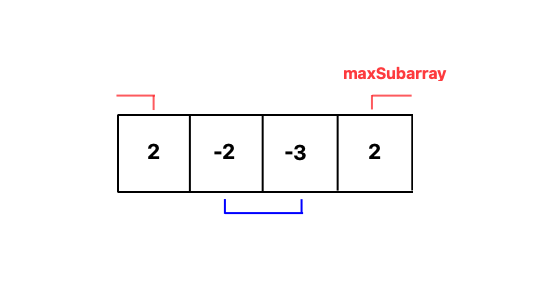
In this case, sum of the rest subarray in the middle always becomes minimum.
Others
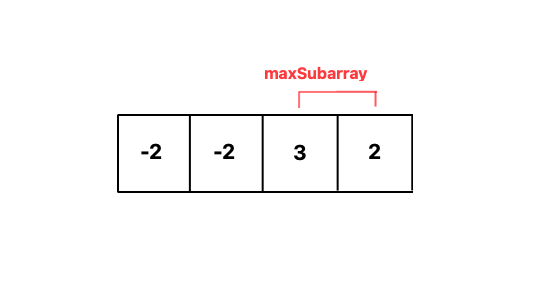
Thus, we can calculate the maximum sum by max(maxSubarraySum, totalSum-minSubarraySum).
From left to right, calculate the maxSubarraySum and minSubarraySum individually, and calculate the ultimate answer.
Note
Think about this corner case: all the elements innumsarray are negative integers.
#Code

typedef vector<int> vi;

class Solution {
private:
    const int NEG_INF= -1e5;
    const int POS_INF= 1e5;

public:
    int maxSubarraySumCircular(vi &nums) {
        int n= nums.size(), totalSum= 0, maxSum= NEG_INF, minSum= POS_INF;
        int curMax= NEG_INF, curMin= POS_INF;
        for (int i=0; i < n; ++i) {
            curMax= max(nums[i], curMax+nums[i]);
            maxSum= max(maxSum, curMax);
            curMin= min(nums[i], curMin+nums[i]);
            minSum= min(minSum, curMin);
            totalSum += nums[i];
        }
        if (maxSum < 0) return maxSum;
        return max(maxSum, totalSum-minSum);
    }
};
#Complexity
- Time:
- Space: